
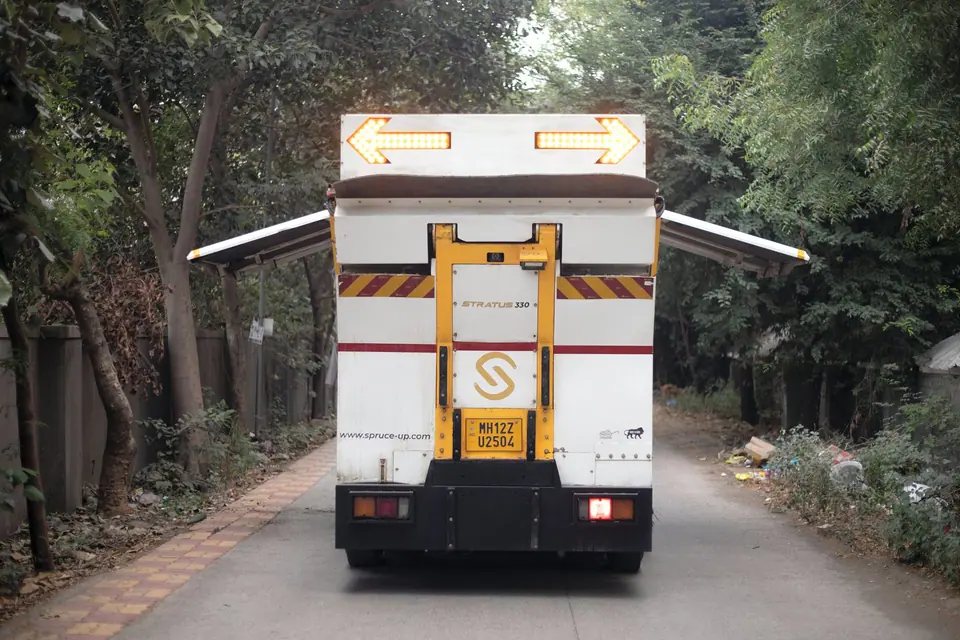
Air-blast vacuum sweeping:
how a road sweeper takes fine dust off the road.
A broom-type sweeper moves fine dust. A suction-only sweeper picks it up at one narrow nozzle. An air-blast vacuum sweeper blasts it out of the road's pores and vacuums it away, across its whole pickup head. Engineers call the method regenerative air.
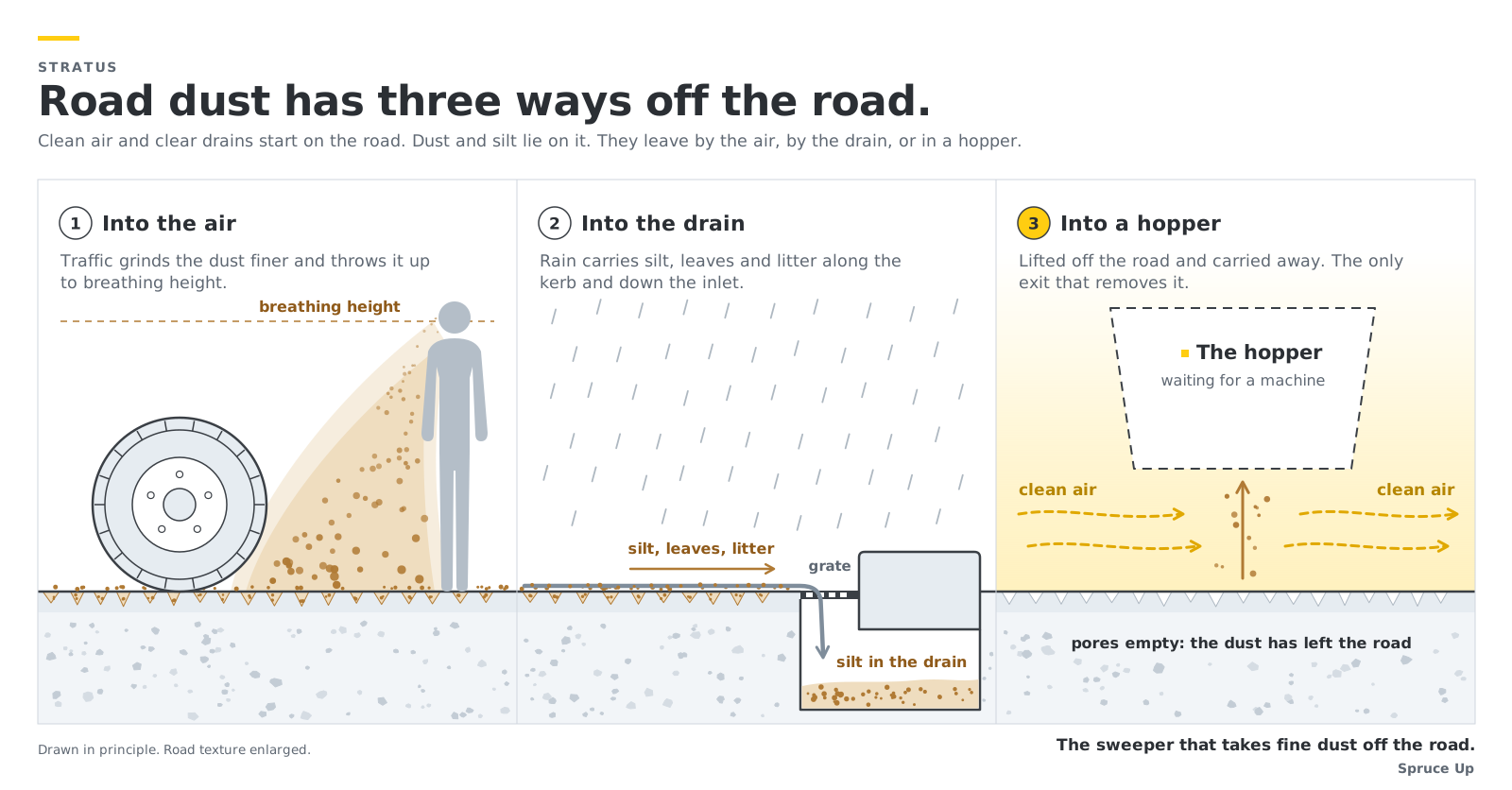
Road dust has three ways off the road.
Dust and silt lie on the road. Traffic grinds the dust finer and throws it up to breathing height; rain carries silt, leaves and litter into the drain. Only a hopper takes it away for good.
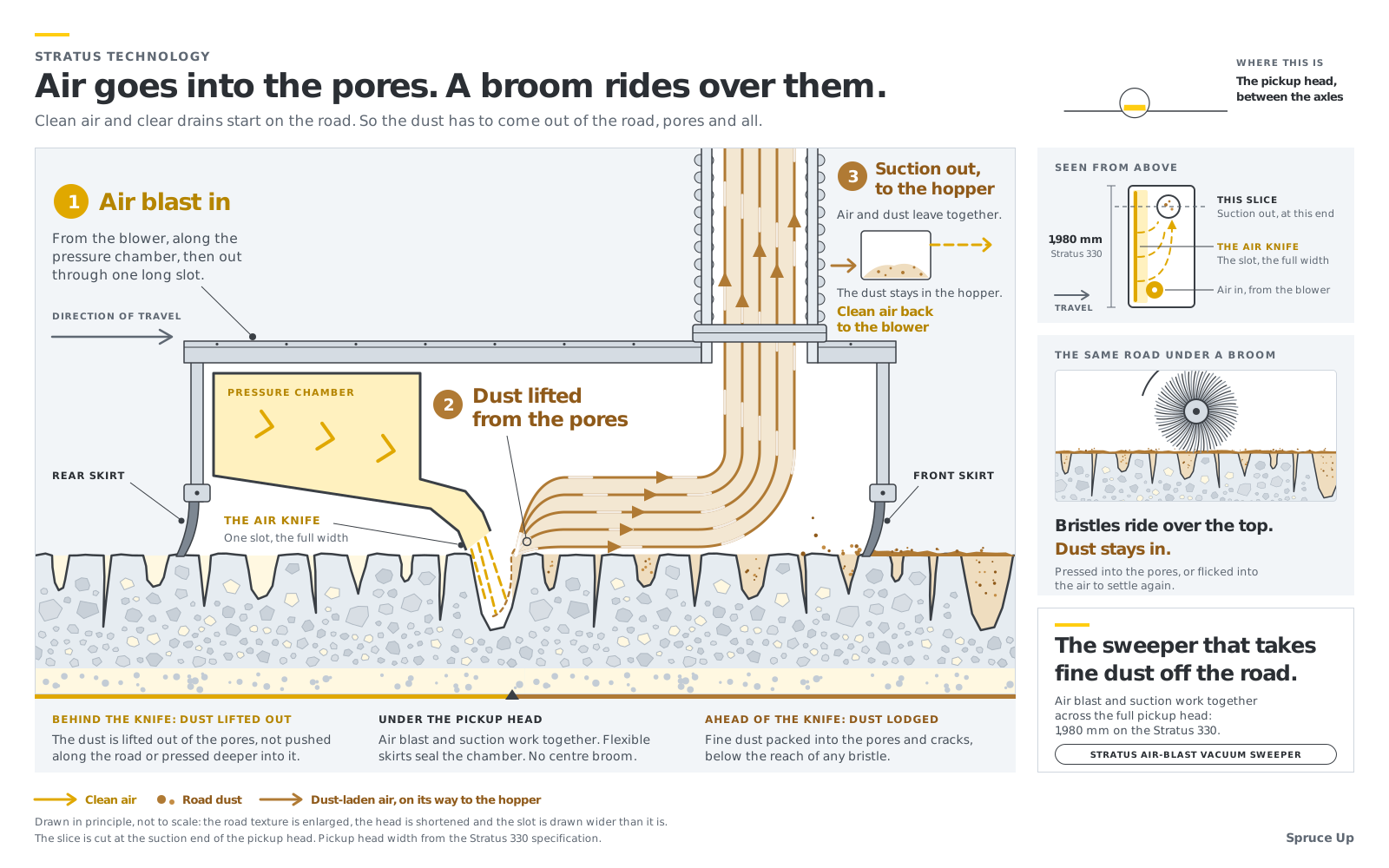
Air goes into the pores. A broom rides over them.
Fine dust packs into the pores and cracks of the road, below the reach of any bristle. A Stratus blasts air out of one long slot across the pickup head, the air knife, at 320+ km/h. The dust is lifted out of the pores and drawn up the suction tube into the hopper.
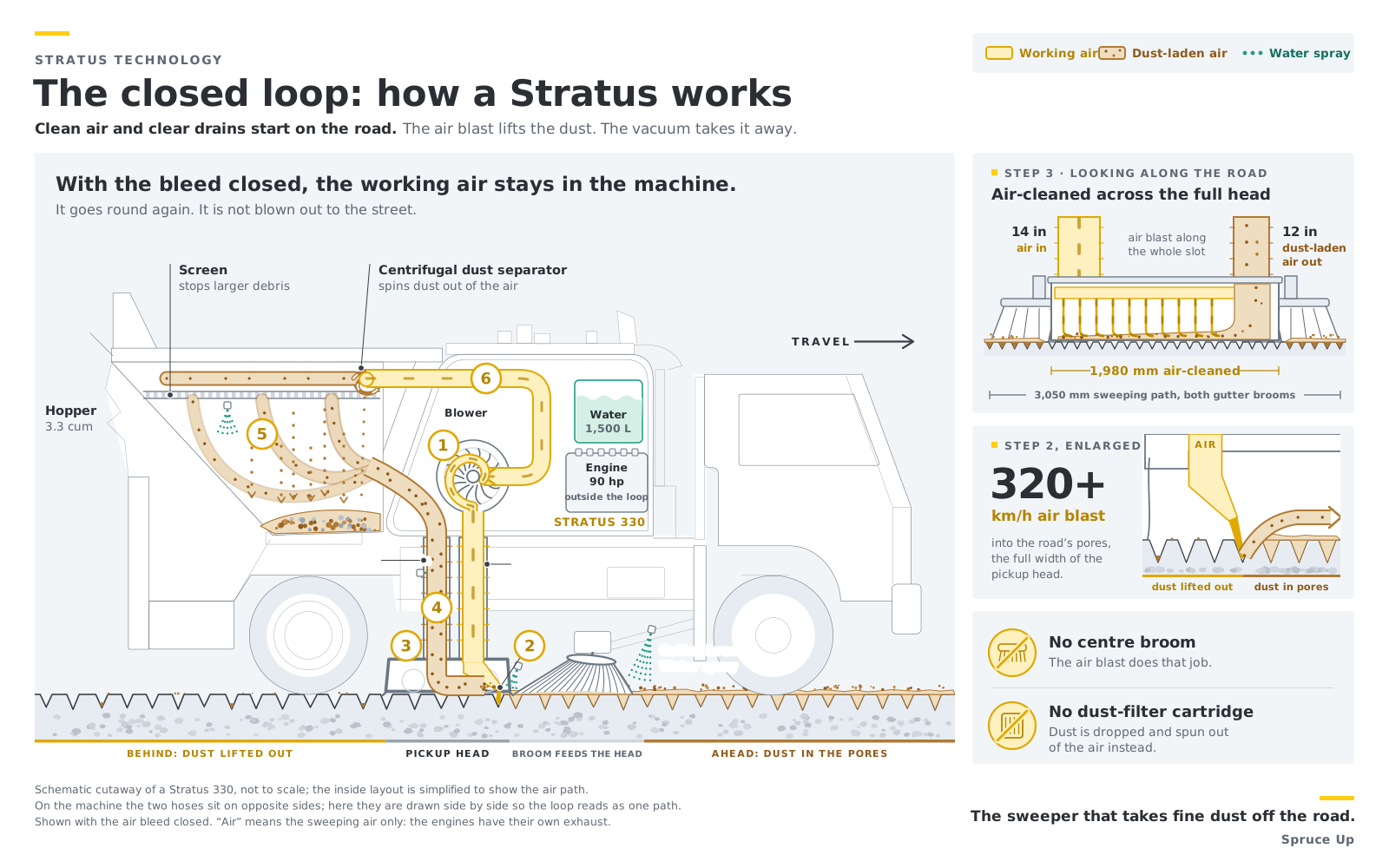
The same air goes round again.
The blower pushes air down the pressure hose to the pickup head; the air blast lifts the dust; the vacuum takes it up the suction hose into the hopper, where a screen and a centrifugal separator spin the dust out. With the bleed closed, the working air goes back to the blower. The engines have their own exhaust.
Three ways a sweeper lifts dirt from the road.
Street sweeping has been mechanised for nearly two hundred years. The broom sweeper is still the most common type on the road. Regenerative air is the newest of the three ways a sweeper lifts dirt from the road: it blasts air onto the surface and draws it straight back in a closed loop.
US EPA guidance finds regenerative-air and vacuum sweepers much more effective than broom sweepers at removing fine particles, down to PM10. Broom sweepers, it says, cannot effectively remove fines and often loosen them from cracks.
Watch the Stratus 330 at work
Sweeping in dry, wet and rainy conditions: dust, mud, muck, and market and roadside waste.
The sweeper that takes fine dust off the road.
Designed in the USA and India. Built in Pune. If you need help choosing, we can carry out a road site analysis and give you a report.
Download the Stratus science and technology brochure (PDF, 3.4 MB) · the Stratus range brochure (PDF, 4.1 MB)
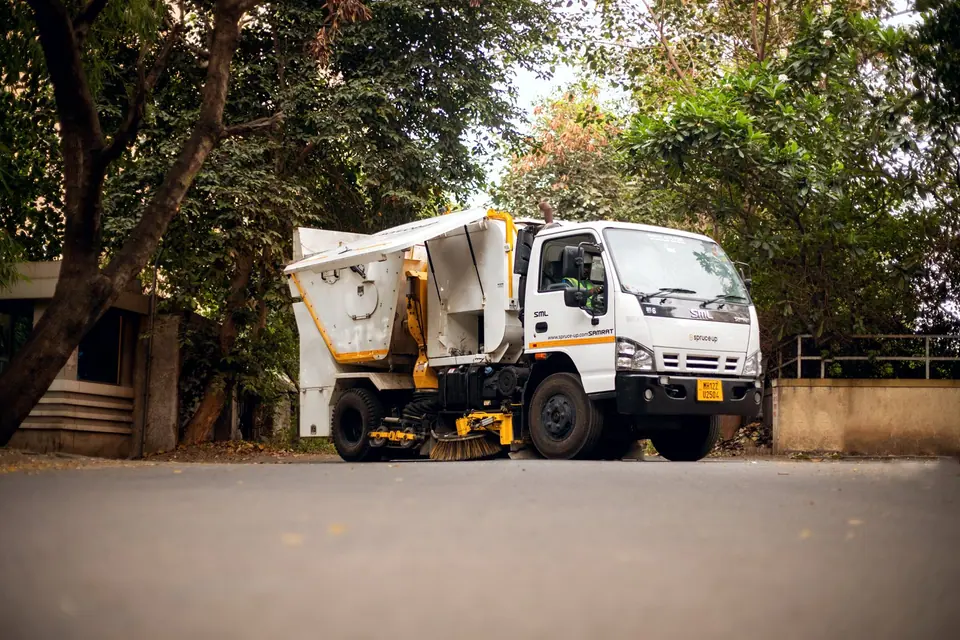
Stratus 330
For city, service and smaller roads: 1,980 mm air-cleaned pickup head, 3.3 m³ hopper.
View Details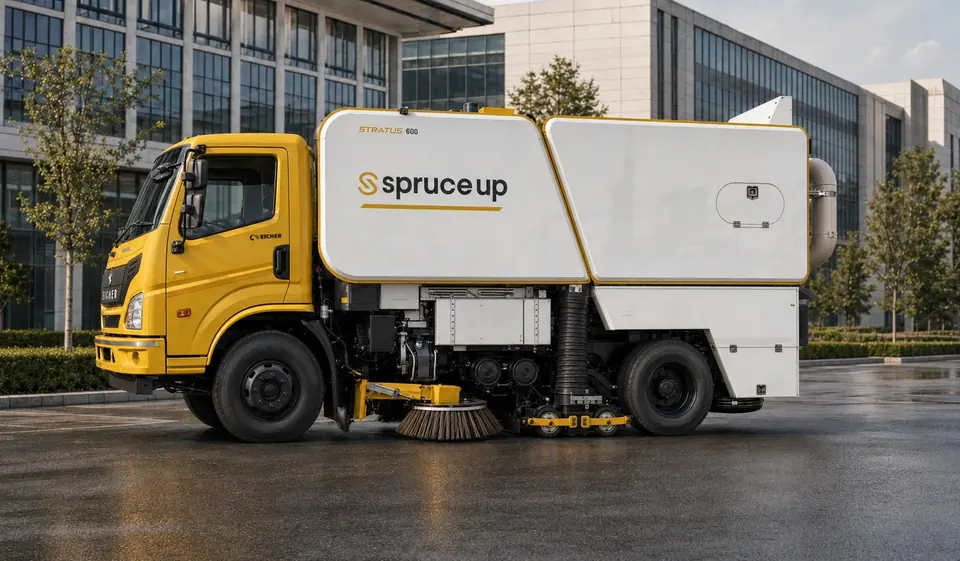
Stratus 600
For main city roads, highways, ports and industry, Diesel or CNG: 2,250 mm pickup head, 6 m³ hopper. Shown as a rendering.
View DetailsSee it take the dust off a road.
At a demonstration we weigh what the Stratus collects over a stretch of road, even after a broom-type sweeper has cleaned it.
Ask for a demoSources: US EPA, Parking Lot and Street Sweeping fact sheet, EPA-832-F-21-030J, December 2021. History of sweeping methods: patents and the Science Museum Group, Grace's Guide, US EPA, FHWA and USGS.