
Many times when we present Jatayu Super, a vacuum-operated litter suction machine, to a municipal team, we hear a familiar question:
“Why do we need this? Why can’t we just hire more manual labour to clean the city?”
It’s a fair question. It comes from years of working with limited budgets and people who genuinely want results. But beneath that question lie a few unsaid doubts. Those unsaid questions are the real ones we need to address.
The questions people actually ask… and what they really mean to ask.
What they ask:
“If I can hire ten or fifteen people and clear the black spots, why should I spend on a machine?”
What they mean:
“I already know how to manage manual cleaning. It’s familiar, it fits my budget, and it works (at least sometimes). Why take a chance with something new?”
That’s a fair worry. But if we look around us, we already know the answer.
If manual cleaning alone worked, our streets would already be clean
India has been using manual cleaning for decades. Almost every city has thousands of sanitation workers who sweep, collect, and load waste every day. And yet, we still see:
- Garbage piled up around the dustbins
- Empty plots turned into dumping grounds
- Litter gathered along medians, walls, and corners
- Waste blocking drain covers and nalas after the rain
So clearly, it’s not that people are not working. It’s that the system itself cannot keep up.
Manual cleaning can fix the problem for a day. We see this before VIP visits, inspections, or events. Sadly, it can’t sustain it every day.
It takes enormous effort, coordination, and cost to maintain that level of cleanliness manually.
So yes, manual cleaning can clear black spots a few times. But sustainably? No.
If it could, we wouldn’t still be facing this problem in 2025.
It’s not even a fair comparison.
It might sound like Jatayu Super and manual labour are two competing options — but they’re not even meant for the same kind of work.
Manual workers were never supposed to lift heavy, mixed, and unhygienic waste from roadsides or drains. It is unsafe, exhausting, and unhealthy. And it’s not the kind of task we should still be asking people to do in modern cities.
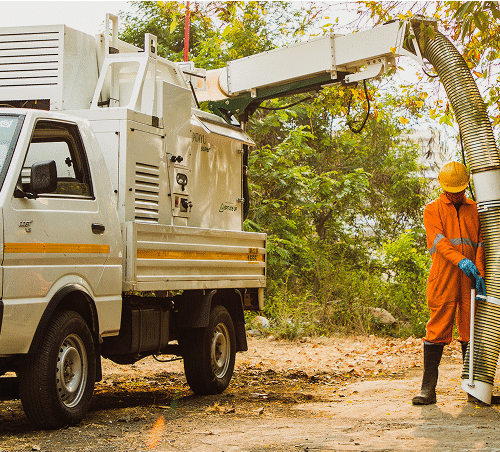
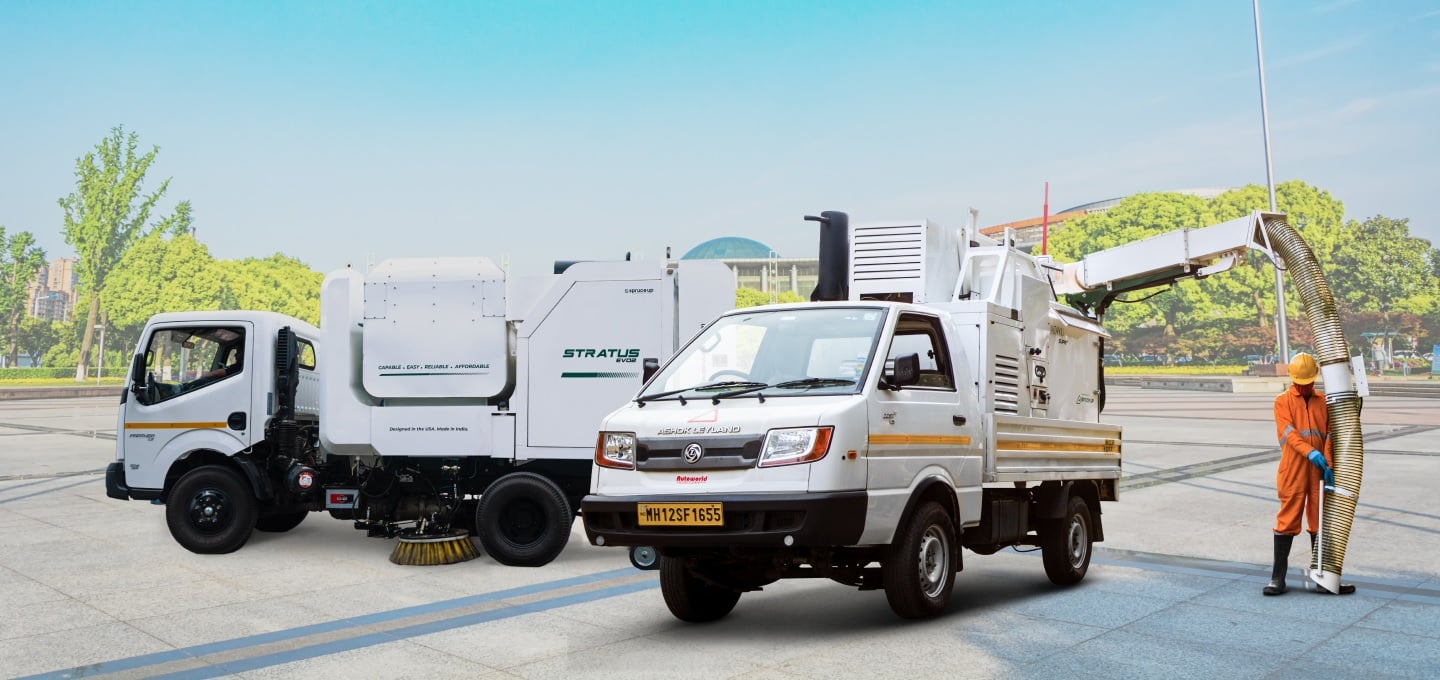
Jatayu Super was designed precisely for this! Jatayu Super is used to suck up large amounts of litter, wet waste, and debris directly into a container without anyone having to lift it by hand. It goes over parked cars, small walls, and medians, reaching places that are dangerous or awkward for a person to access.
It then dumps the waste directly into a collection vehicle, saving the time and physical strain of carrying garbage on heads or shoulders.
So when someone compares a person with a broom to a litter suction machine, it’s not a fair comparison — because they are not doing the same job.
One is meant for sweeping light surface dust; the other is for removing large, mixed, and heavy litter safely and quickly.
Why manual looks cheaper, but isn’t?
Manual labour feels inexpensive because the cost is spread across many small payments — daily wages, monthly salaries, or contract bills.
It’s easy to approve, easy to repeat, and doesn’t invite much audit attention. But when you add up absenteeism, strikes, supervision costs, and rework, it becomes clear that the system is expensive without being efficient.
Every city experiences this cycle:
- Attendance drops during festivals, rains, or local events
- Black spots return within hours of cleaning
- Supervisors spend more time managing attendance than measuring outcomes
- Strikes and union stoppages halt cleaning for days
So what looks like a low-cost option on paper actually leads to higher cost per tonne of waste removed and inconsistent service delivery.
What Jatayu Super changes
With Jatayu Super, you get measurable, repeatable, and safer cleaning operations.
Each shift delivers a verifiable record of performance — GPS route logs, photos, and total waste collected.
Here’s what that means for a municipal team:
- Predictable cost per shift — no hidden overtime or replacement wages
- Consistent results — same coverage every day, without fatigue or weather impact
- Transparency — route and performance data ready for audit or dashboard reporting
- Safety and dignity — no more lifting or handling heavy, mixed waste manually
And beyond this, you also gain something crucial: control.
You can see exactly what happened, where, and when — something that is almost impossible to do in a manual-only system.
A decade of field experience
Spruce Up has been designing and building these litter suction machines for almost ten years.
Over 300+ units have already been deployed across 24 Indian states, with several operating continuously in municipal corporations and large city zones.
That means this isn’t an experiment. It’s a proven system with real uptime, real users, and real results.
Mechanisation is not replacement — it’s empowerment.
Mechanisation doesn’t take away jobs. It takes away risk, inefficiency, and hardship.
When manual workers become operators, supervisors, or maintenance staff for machines like Jatayu Super, their work becomes cleaner, safer, and more respected.
The goal isn’t to remove people. It’s to make their work sustainable and dignified.
The way forward
Manual cleaning helped build our cities. But to keep them clean — day after day, year after year — we need systems that can handle modern challenges.
Jatayu Super isn’t here to replace people. It’s here to support them with technology that lifts the weight, manages the risk, and delivers measurable results.
If you’d like to see how it works in practice, request a virtual demo.
You’ll see how one operator can do the heavy lifting of an entire team — faster, safer, and with full accountability.